We surveyed more than 400 clients about how they choose a profile, check that it is real, and decide who to book. Here is what they told us, and what it means for how a directory should work.
420 respondents · about a 10 minute read
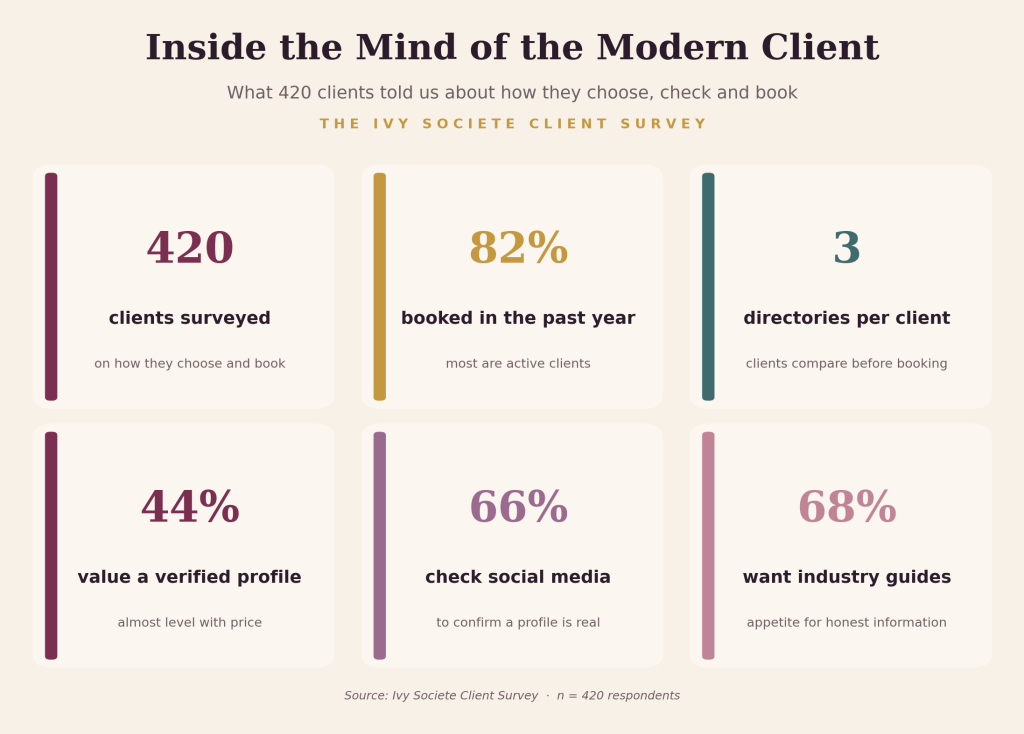
Booking through an escort directory is often assumed to be a quick decision: look at a photo, check the price, send a message. The survey points to something more deliberate. Most of the 420 people who answered compare several options, check more than one source, and put real weight on knowing who they are actually contacting.
This survey was run among clients in Australia. The behaviour it describes does not appear to be specific to one country. How clients decide whether a profile is trustworthy, and how they compare their options, looks much the same in any market we have looked at.
Who answered
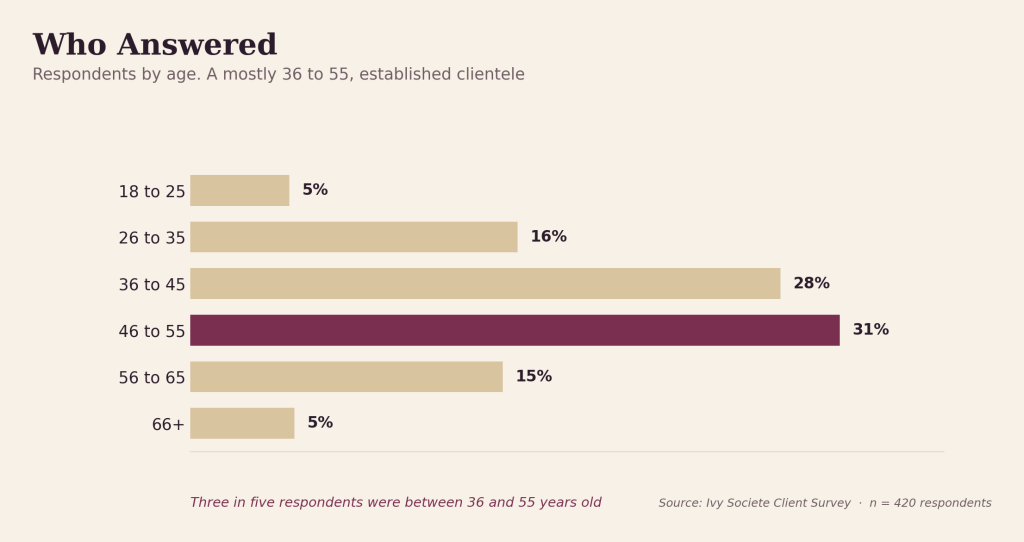
A settled, mostly 36 to 55 clientele.
The people who responded were mostly settled adults rather than a young or casual crowd. Three in five were aged between 36 and 55, and the single largest group was 46 to 55. That context matters for the rest of the findings: this is an audience with experience, clear expectations, and the patience to compare before they commit.
Most clients use more than one directory
Comparison is the default, not the exception.
What we expected: Most clients would settle on one directory they liked and stay with it.
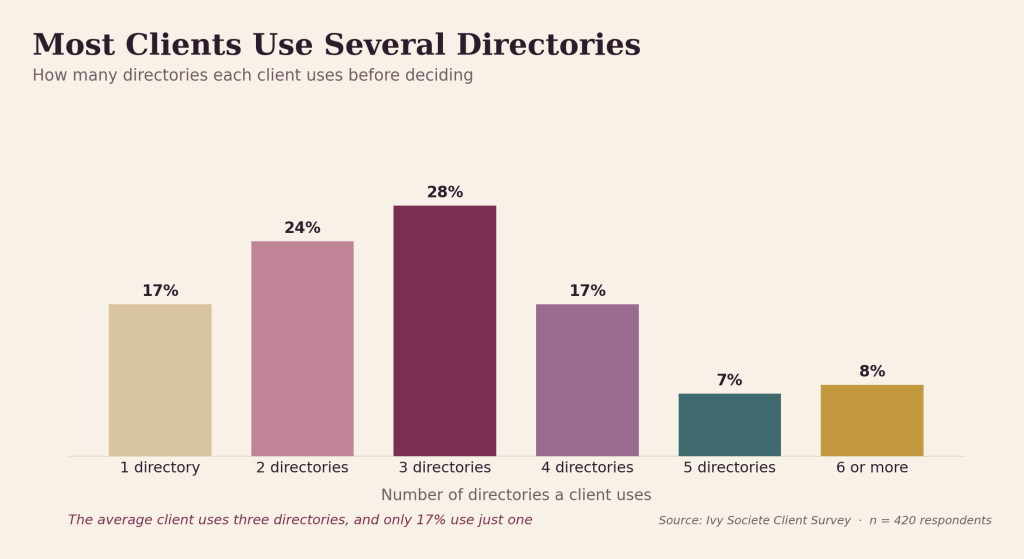
What the data showed: They do not. On average, each client uses three different directories, and only 17% use a single one.
Most people open several sites and compare before they decide who to contact. That shapes what a directory should aim for. Clients will look elsewhere regardless, so the realistic goal is to be the site they trust when they make the final call.
What clients actually weigh
Photos get attention. Something else gets the booking.
What we expected: Looks and price would decide almost everything.
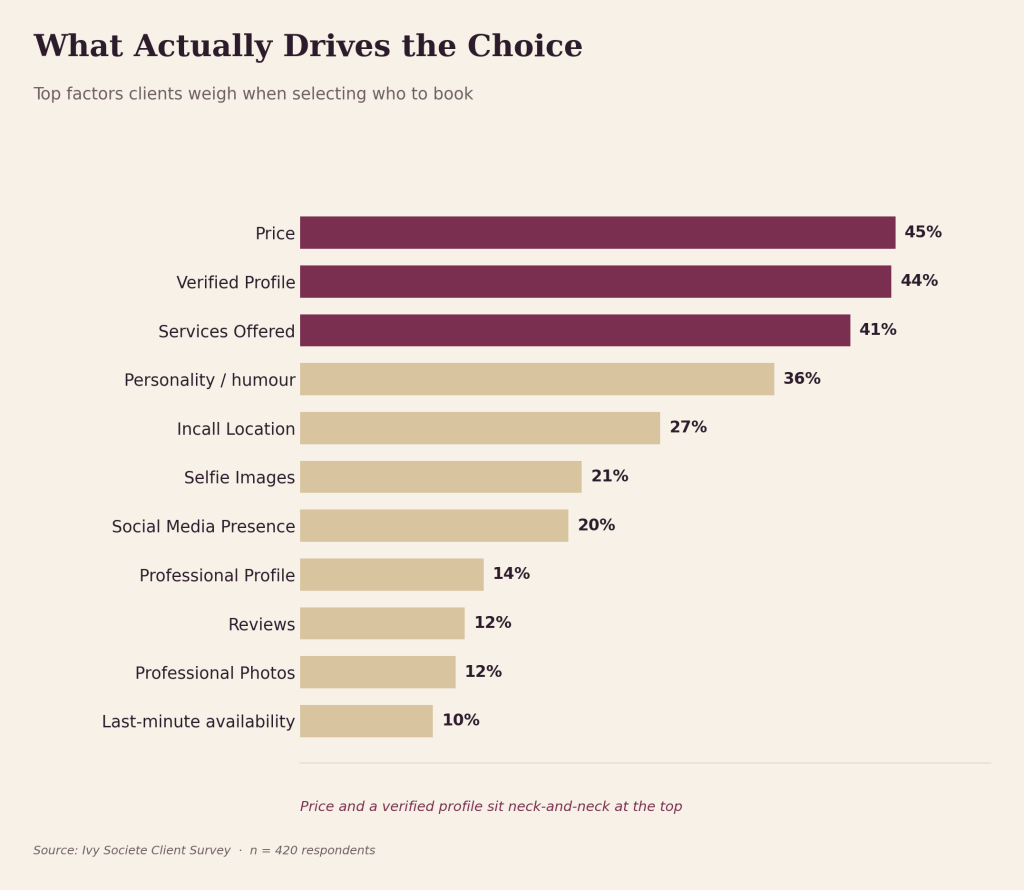
What the data showed: Price came first (45%), but a verified profile was almost level (44%). Services offered (41%) and personality (36%) ranked far above professional photos (12%).
One detail stands out: selfies (21%) mattered more to clients than professional photos (12%). People want to see what someone actually looks like, not a polished studio image. They are choosing a real person with a clear offering, someone they expect to enjoy spending time with, and they treat over-produced photography with some caution.
Clients check before they book
Verification is something this audience does for themselves.
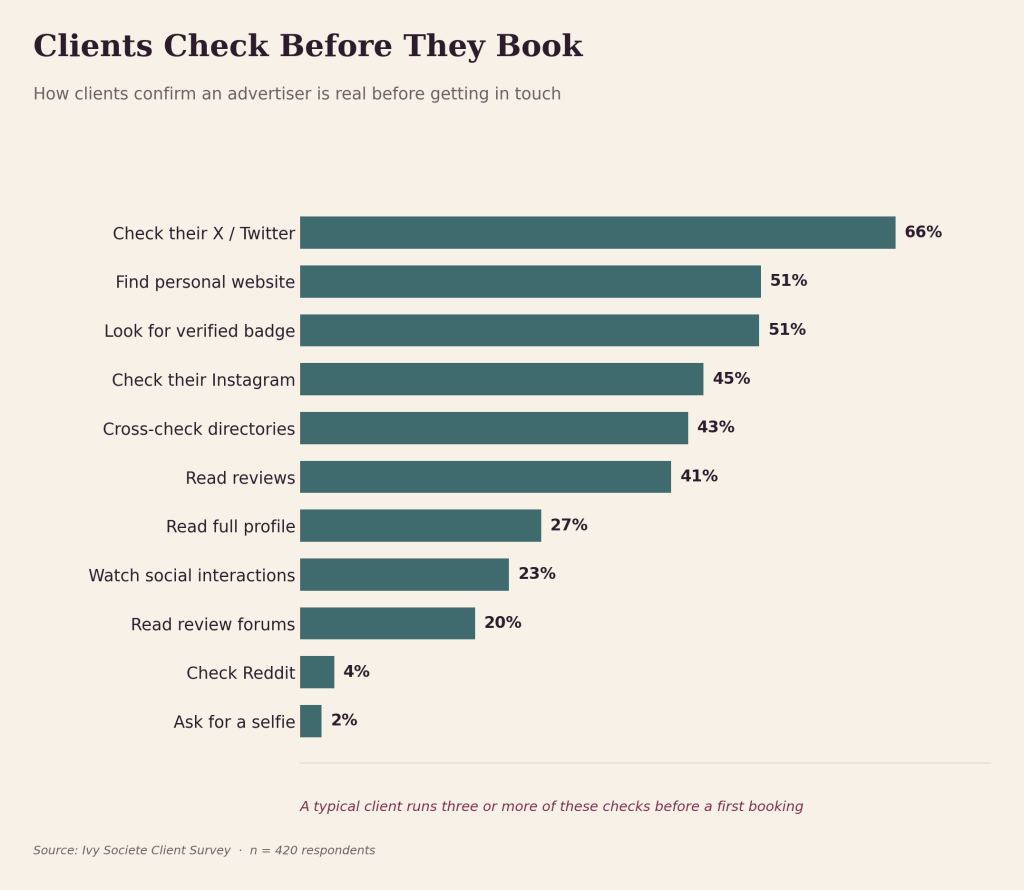
The survey asked what clients do to confirm a profile is genuine before reaching out. They do a lot, and they rarely rely on one source. Two in three (66%) look at the advertiser’s account on X or Twitter. More than half look for a personal website (51%) or a verified badge (51%). Nearly half check Instagram (45%), many look for the same person across more than one directory (43%), and many read reviews (41%).
A typical client runs three or more of these checks before a first booking. When a poor decision can mean anything from a wasted evening to a real safety risk, that level of caution is reasonable, and it explains why directories that take the guesswork out tend to do well.
“Ivy Societe is one of the few sites where I know the profile will accurately match the person who arrives for the booking.”
Survey respondent
When clients are already running their own background checks, the most useful thing a platform can do is handle that work for them. Two in three respondents (66%) already knew that every profile on Ivy Societe is verified. Reaching the third who did not is one of the clearest opportunities the survey points to.
How often clients book
A regular, active audience.
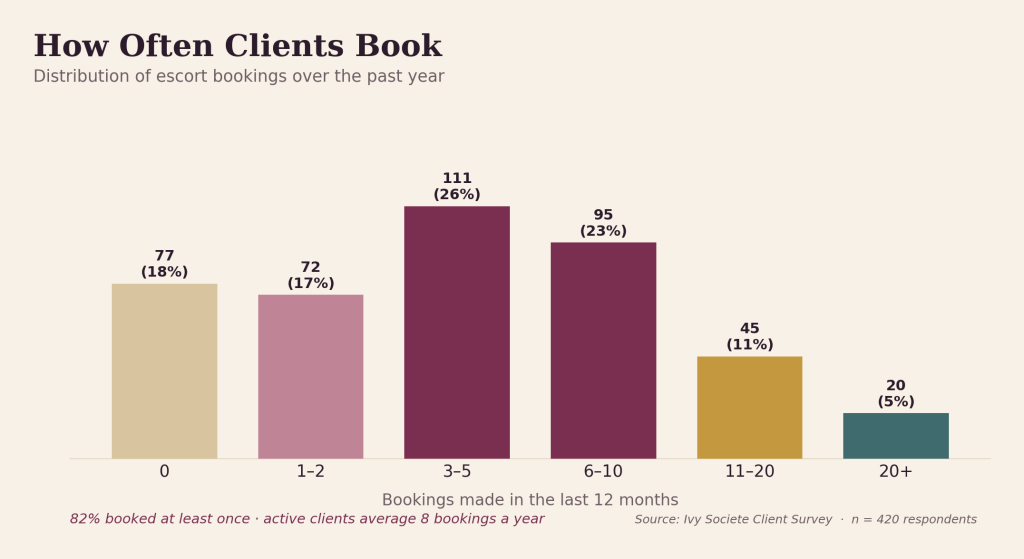
Most respondents book regularly. 82% had booked at least once in the past year, and among those, the average was about eight bookings a year. The pattern is a large, steady group who book a few times a year, alongside a smaller group who book monthly or more. The 18% who had not booked recently still count: they are comparing options and building the confidence that turns into a booking later.
What clients want improved
The feedback was practical, and it is on our roadmap.
No survey is worth running if it only collects praise. When we asked what would make the experience better, three themes came up again and again.
- Better search and filtering. The most common request by far. Clients want to narrow results by service, location, and availability more quickly. The faster the search, the sooner they can act.
- A clearer way to tell local advertisers from those who travel. Working out who is actually in a client’s area, rather than visiting from elsewhere (often called “fly me to you”, or touring), was the most common point of confusion. A filter for this already exists, and making it easier to find is a priority.
- Richer profiles. The most requested additions were live availability calendars, verified video, and a clearer breakdown of services. These are the details that let a client commit with confidence.
In their words
A few voices from the 420.
“Ivy Societe obviously cares about the experience for both the provider and the client. Having a professional space for both parties to connect safely and with confidence brings more credibility to the industry.”
Survey respondent
“Easily one of the better sites to use. The navigation and the verified profiles are why I keep coming back to Ivy Societe.”
Survey respondent
“I have met so many people worth knowing by finding them on Ivy Societe first. It is a pleasure to use.”
Survey respondent
What it adds up to
A few patterns run through the survey. Clients compare before they commit, using three directories on average and rarely relying on one. Price and a verified profile carry almost equal weight, and the services and personality behind a profile matter more than polished photos. Most clients also do their own checking before getting in touch, usually across several sources.
The common thread is trust. This audience has learned to verify for itself, and it favours platforms that take that work seriously. The takeaway for any directory is simple: make it easy to confirm a profile is real, give clients the detail they need to decide, and the rest tends to follow.
About this survey. The findings come from 420 responses to the Ivy Societe Client Survey. Respondents were clients based in Australia, where Ivy Societe is currently established, along with a small number of advertisers and others. Because it is a voluntary survey of an existing community, the results reflect engaged respondents rather than a random sample of all clients, and some questions allowed more than one answer, so totals can exceed 100%. Percentages are rounded to the nearest whole number.